CO₂ vs. Diode Lasers in Soft Tissue Dentistry: What’s the Real Clinical Difference?
Source: Dr. Marketing
As laser dentistry continues to expand across the United States, more clinicians are evaluating which technology truly aligns with their long-term vision. One of the most common questions we hear from dentists is:
“What is the real difference between CO₂ and diode lasers?”
On the surface, both systems are marketed as soft tissue solutions. Both can incise, coagulate, and improve surgical efficiency. But from a clinical and scientific standpoint, they are fundamentally different technologies. If you are comparing CO₂ vs. diode laser systems for your practice, understanding these differences will directly influence your outcomes, versatility, and return on investment.
The Science Starts with Wavelength
The most important difference between CO₂ and diode lasers lies in their wavelength — because wavelength determines tissue interaction.
A true CO₂ laser operates at 10,600 nanometers (nm).
Most diode dental lasers operate between 810–980 nm.
This is not a small distinction. It changes everything about how energy behaves in oral tissues.
CO₂ laser energy is highly absorbed by water. Since soft tissue is largely composed of water, this allows for precise surface-level ablation with controlled penetration. Diode lasers are absorbed primarily by pigmented chromophores such as hemoglobin and melanin. This produces a different absorption profile and deeper tissue penetration.
The result? Two technologies that may look similar in marketing brochures — but perform very differently in the operatory.
Tissue Interaction: Controlled Surface Energy vs. Deeper Penetration
Because CO₂ energy is strongly absorbed by water, it remains primarily at the surface of soft tissue. This allows for:
- Clean incisions
- Minimal lateral thermal spread
- Excellent visibility during surgery
- Predictable coagulation
The laser effectively vaporizes tissue in a controlled manner without excessive subsurface heat diffusion.
Diode lasers, by contrast, penetrate more deeply before absorption occurs. While this can provide effective coagulation, it also means energy travels beyond the immediate surface area.
In procedures requiring fine control — such as frenectomy, implant uncovering, or delicate tissue contouring — this distinction matters. When precision is critical, the absorption behavior of CO₂ technology offers a measurable clinical advantage.
Healing Response and Thermal Impact
Every laser procedure creates a thermal zone. The size and depth of that zone influence healing outcomes. CO₂ lasers, due to their superficial absorption, typically produce:
- Well-defined incision margins
- Reduced collateral thermal damage
- Predictable epithelial healing
- Minimal postoperative inflammation
This controlled interaction is one reason CO₂ lasers are widely used in surgical environments beyond dentistry.
Diode lasers can be highly effective in soft tissue procedures, particularly when used correctly. However, because of deeper penetration, thermal spread must be carefully managed.
For clinicians focused on refined surgical control and consistent healing patterns, wavelength absorption characteristics are a central decision factor.
Frenectomy: A Procedure That Highlights the Difference
Laser frenectomy has become one of the fastest-growing procedures in dentistry, especially in airway-focused and pediatric practices.
When evaluating the best laser for frenectomy, consider what the procedure requires:
- Precise release
- Minimal trauma
- Excellent visibility
- Controlled coagulation
CO₂ lasers excel in superficial ablation and controlled incision. Their interaction with water-rich mucosal tissue allows for highly precise release with minimal unintended depth. Diode lasers can also perform frenectomies effectively, particularly for coagulation. However, careful parameter control is required to avoid excessive thermal impact beneath the surface.
If frenectomy is a growing part of your clinical offering, understanding these tissue dynamics is essential.
Implant Tissue Management
As implant dentistry continues to grow across the United States, so does the need for precision soft tissue management.
Implant uncovering and peri-implant contouring require:
- Clear visibility
- Controlled ablation
- Preservation of surrounding tissue
- Stable energy delivery
CO₂ lasers provide superficial absorption and stable beam control, allowing for refined tissue sculpting around implant sites.
Diode systems can support soft tissue management, particularly for bacterial reduction and coagulation, but their interaction profile differs.
When surgical precision around restorative margins matters, understanding the physics behind your laser technology becomes increasingly important.
Versatility Beyond Basic Soft Tissue
One of the most significant long-term differences between CO₂ and diode systems lies in versatility.
CO₂ platforms are often engineered to support:
- Advanced soft tissue surgery
- Fractional scanning applications
- Airway-related procedures
- Collagen remodeling protocols
This broader capability allows practices to expand into new treatment categories over time. Diode lasers are generally more limited to soft tissue incision and coagulation applications. If your vision includes growing into airway dentistry, expanding surgical services, or differentiating your practice through advanced procedures, versatility should weigh heavily in your decision.
Workflow and Clinical Experience
Beyond tissue science, there is the day-to-day experience of using the technology.
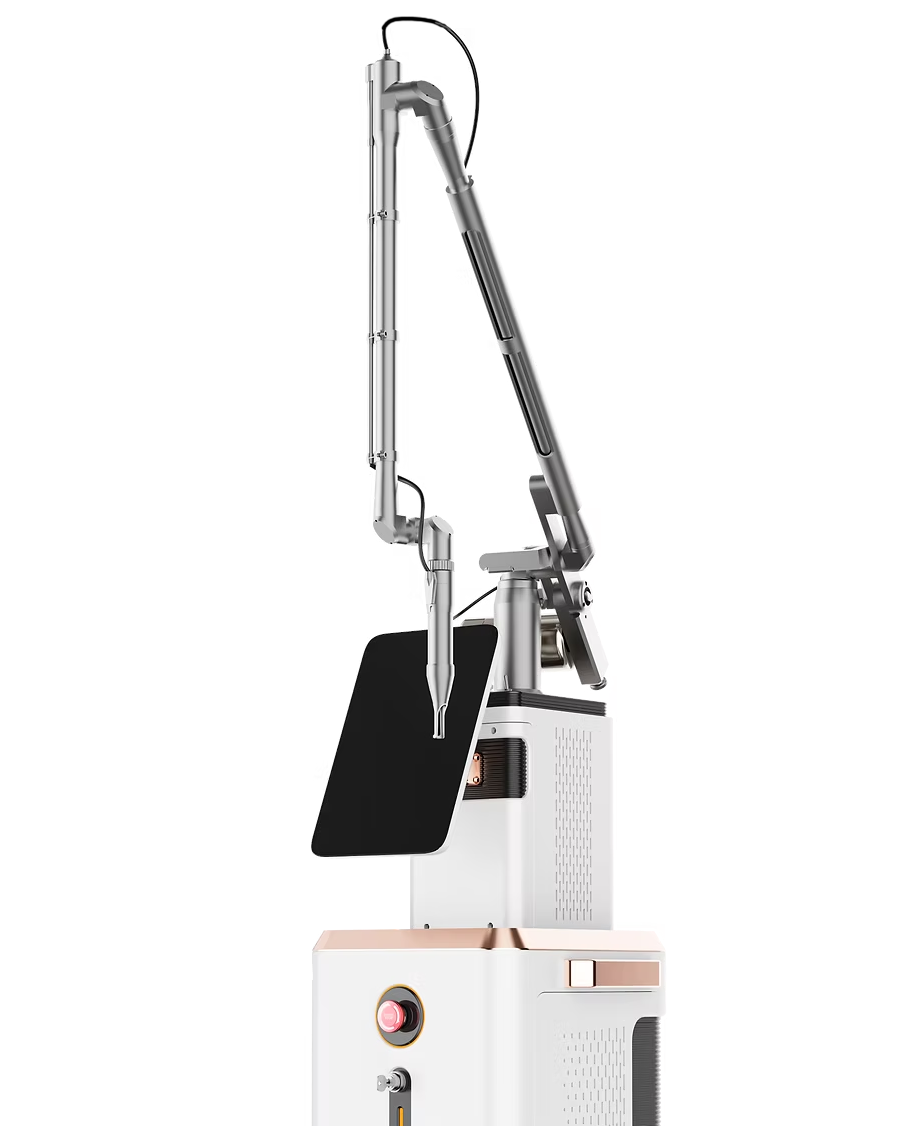
CO₂ systems commonly utilize articulated arm delivery, providing stable beam positioning and consistent spot size. This mechanical precision enhances surgical confidence and repeatability.
Many diode systems utilize fiber-optic delivery, which offers flexibility but may require periodic replacement and maintenance. These operational differences influence not only clinical feel, but also long-term ownership experience. Efficiency in modern U.S. dental practices is directly tied to production and profitability. Technology should enhance workflow — not complicate it.
The Business Perspective: ROI and Market Positioning
In today’s competitive environment, patients actively search for:
- Laser gum surgery
- Laser frenectomy
- Minimally invasive dental procedures
- Advanced soft tissue dentistry
Technology is increasingly part of your brand positioning. Practices that integrate advanced laser systems often see:
- Higher perceived value
- Increased case acceptance
- Expanded service offerings
- Greater referral differentiation
While diode systems may provide entry-level laser capability, CO₂ platforms often support broader growth trajectories. The question becomes: Are you investing in a tool for today — or a platform for the next decade?
Education and Clinical Confidence
Technology adoption is not only about hardware — it is about education. Proper training ensures:
- Safe energy application
- Accurate parameter selection
- Confidence in advanced procedures
- Accelerated integration into daily workflow
Comprehensive laser education transforms equipment into a strategic clinical asset.
Interested in advancing your laser skills? Learn more about our CO₂ laser dental training courses and upcoming programs.
Safety and Compliance
Laser systems must meet strict safety standards and regulatory requirements in the United States. CO₂ systems designed for dental use are engineered to comply with FDA regulations and clinical safety protocols. Understanding the safety profile, beam control, and tissue interaction characteristics of your chosen technology is critical for both patient protection and professional confidence.
This is not simply a purchasing decision — it is a clinical responsibility.
Making the Right Decision for Your Practice
When comparing CO₂ vs. diode lasers in soft tissue dentistry, avoid reducing the conversation to price alone. Instead, evaluate:
- Wavelength absorption characteristics
- Precision and thermal control
- Procedural versatility
- Long-term growth potential
- Training and support
Both technologies have value. They are not interchangeable.
If your practice goals center around refined surgical precision, expanded clinical applications, and long-term differentiation, CO₂ technology offers a distinct performance profile rooted in physics.
If your needs are limited to basic soft tissue cutting and coagulation, a diode system may meet those narrower objectives.
The right decision depends on where you are — and where you intend to go.
Still comparing CO₂ vs. Diode Systems?
The real clinical difference between CO₂ and diode lasers lies in science — not marketing language. CO₂ lasers operate at 10,600 nm and are absorbed by water, producing controlled, superficial tissue interaction with excellent precision and predictable healing.
Diode lasers operate in the 810–980 nm range and are absorbed by pigmented tissues, offering coagulation benefits with deeper penetration characteristics. Understanding these distinctions empowers you to make an informed investment decision that aligns with your clinical philosophy and growth strategy.
The right laser technology does more than cut tissue. It shapes the future of your practice.
Recent Posts